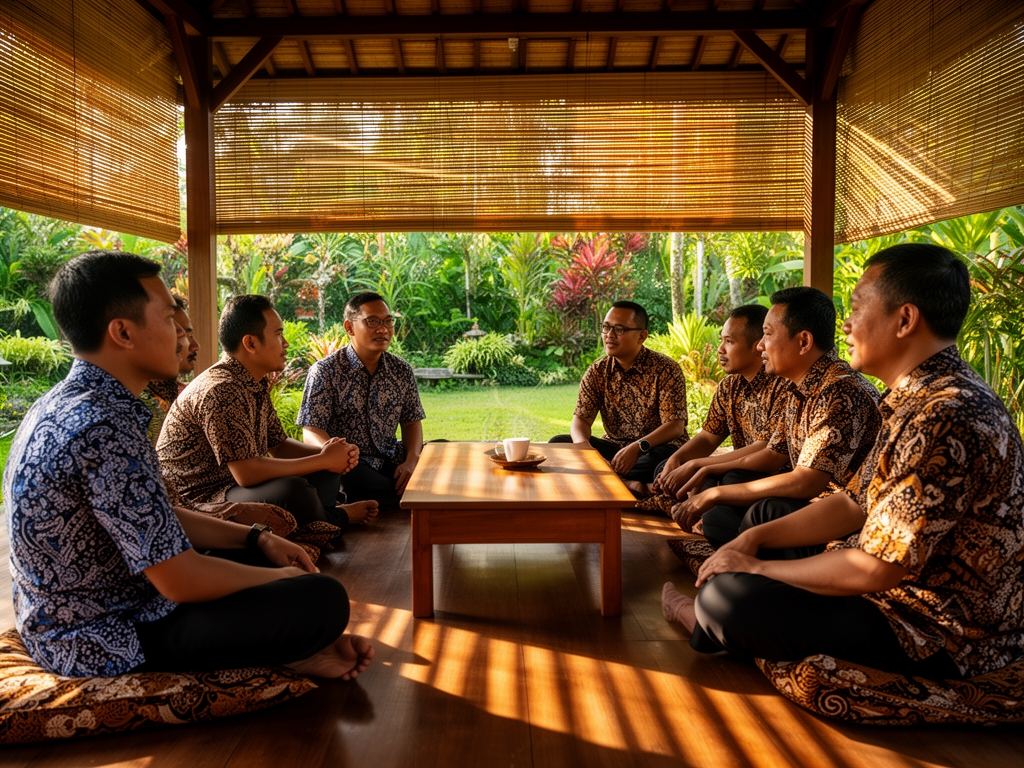
The Psychology of Connection
Human beings are fundamentally social creatures. This claim, ubiquitous in both research literature and popular discourse, is supported by an extensive body of evidence drawn from evolutionary biology, developmental psychology, social neuroscience, and epidemiology. The capacity for connection — for forming and maintaining meaningful relationships with other people — is not merely a pleasant feature of human experience but a foundational condition for development, functioning, and wellbeing across the life course.
Psychologist John Cacioppo, who spent much of his career studying the effects of social isolation, consistently found that the experience of loneliness — which he carefully distinguished from mere physical aloneness — was associated with measurable differences in physiological states, cognitive functioning, and long-term outcomes across multiple domains. His research contributed to a growing body of evidence that social connection functions not as an optional enhancement to individual wellbeing but as something closer to a basic requirement.
Attachment theory, developed by John Bowlby and elaborated by Mary Ainsworth and subsequent researchers, provides one of the most influential frameworks for understanding the origins and nature of human connection. The theory proposes that the human infant arrives in the world already oriented toward forming close bonds with caregivers — that this orientation is not learned but constitutive of human nature. The specific character of these early bonds establishes patterns that, while not deterministic, tend to shape how individuals approach and experience close relationships throughout life.
Types of Meaningful Connection: A Comparative Overview
Not all relationships are equivalent in their structure, function, or significance. The following comparative overview distinguishes between several major categories of meaningful human connection, examining their characteristic features and their distinct contributions to individual and collective wellbeing.
Types of Relationships — Characteristics and Contributions
-
Deep FriendshipCharacterized by mutual disclosure, reciprocity, and sustained shared history. Chosen rather than ascribed. Maintained through investment and effort over time.Provides a space for authentic self-expression, honest feedback, and the experience of being genuinely known. A primary buffer against isolation.
-
Family BondsDefined by shared lineage, formative shared history, and often enduring obligation. In Indonesian culture, typically extended beyond the nuclear unit to include broader kinship networks.Supplies foundational belonging, identity continuity across generations, and resilience through collective resource-sharing during difficulty.
-
Community TiesBroader networks of belonging organized around shared space, shared practice, shared belief, or shared circumstance. In Indonesian context, includes neighborhood (rukun tetangga), religious, and occupational communities.Creates a sense of collective meaning and shared purpose, extends practical support networks, and reinforces cultural and value continuity.
-
Mentorship RelationsStructured by difference in experience or knowledge, with knowledge and perspective flowing primarily in one direction — though mature mentorship involves genuine exchange.Accelerates the transmission of tacit knowledge, provides contextual guidance through transitions, and supports identity development by modeling possible futures.
-
Collegial NetworksRelationships organized primarily around shared professional or civic activity. Often more bounded and instrumental than deep friendship but can develop depth over time.Extends the range of perspectives available to an individual, supports professional functioning, and provides a context for purpose and contribution beyond the private sphere.
Communication Dynamics
The quality of communication within relationships is consistently identified in research as one of the most significant determinants of relationship depth and durability. This is not simply a matter of technique — of deploying particular conversational strategies — but of the underlying orientations that shape how participants approach interaction.
Psychologist Deborah Tannen's research on conversational style highlighted significant systematic differences in how individuals — shaped by gender, culture, and regional context — use language in interaction: some prioritizing information exchange, others emphasizing relational connection; some oriented toward establishing status and autonomy, others toward expressing solidarity and inclusion. These differences are not matters of individual personality alone but reflect deeply embedded cultural patterns that shape the texture of everyday social life.
In the Indonesian context, the widespread value placed on maintaining relational harmony — reflected in concepts like rukun (social harmony) and the elaborate social protocols governing formal interaction — creates a distinctive communicative environment. Direct confrontation or explicit disagreement is often avoided in favor of more indirect expressions of dissent or concern, a pattern that can be misread by those unfamiliar with these norms as evasiveness or lack of engagement rather than recognized as sophisticated management of relational priorities.
Community Building Through History
The formation and maintenance of community has been a central human activity across all documented societies and historical periods. The specific forms — tribal, village, urban, religious, civic — have varied enormously, but the underlying impulse to create durable structures of belonging and mutual obligation appears as a constant feature of human social life.
In Indonesian history, the system of gotong royong — mutual cooperative assistance in which community members contribute labor and resources to shared tasks — represents one of the most enduring indigenous frameworks for community formation and maintenance. The concept, which has formal recognition in Indonesian national ideology, captures something that anthropologists studying Indonesian communities across the archipelago have consistently identified: a deep-seated orientation toward collective responsibility that shapes how communities are organized, how problems are approached, and how belonging is understood and enacted.
The rapid urbanization of the Indonesian population over recent decades has placed new pressures on traditional community structures. The rukun tetangga (neighborhood association) system that organizes urban community life in Indonesian cities represents an attempt to maintain some of the social infrastructure of gotong royong within the more fluid, anonymous conditions of urban life. Research on the functioning of these structures suggests both their continued vitality in many contexts and the real challenges that population mobility, economic pressure, and the competing demands of urban life pose for their maintenance.
Looking more broadly, the historical record suggests that community structures are neither static inheritances nor purely spontaneous creations but ongoing achievements — maintained through repeated acts of participation, contribution, and renewal by their members. The conditions under which they flourish and those under which they deteriorate are subjects of active inquiry in sociology, urban studies, and related fields. Understanding these conditions is a prerequisite for any serious engagement with questions of connection and belonging in contemporary life.